






10 Fuel Economy Hacks That Will Help You Save Money on Gas
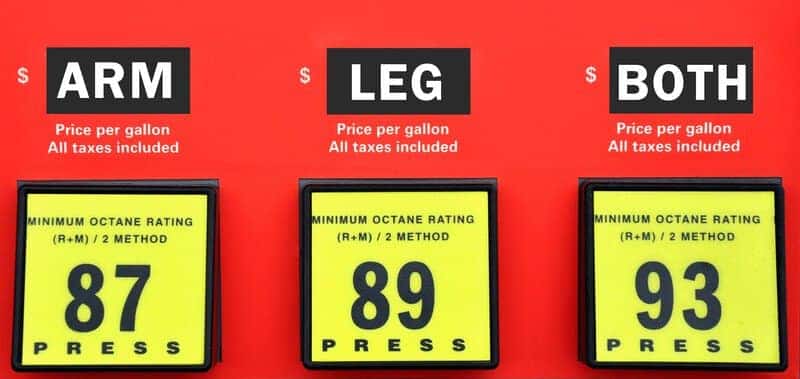
With gas prices at an all-time high, there’s never been a better time to ensure that your vehicle is as fuel efficient as possible. Regardless of the type of car you drive, practicing good driving habits contributes to better fuel economy, which can save you substantially at the gas pump (and help save the environment, too).
Check out the following ten tips to help you become a more fuel-efficient driver.
Drive the Speed Limit
The harder your engine works, the more gas it will use. High speed driving requires your car to work harder and sucks up more gasoline. In fact, your gas mileage will start rapidly decreasing at speeds above 50 miles per hour. Reducing your speed by 5 to 10 miles per hour can improve fuel economy by 7%-14%. Be sure to drive at a constant speed too: both rapidly accelerating and suddenly braking waste fuel too.
Schedule Regular Maintenance and Service Visits
Routine maintenance is one of the most important ways to keep your car’s performance as efficient as possible. Although results vary depending on how well your car is already running, the short-term costs of properly maintaining your car can improve its gas mileage by an estimated 4%. And fixing a serious maintenance issue – such as a faulty oxygen sensor – can improve your mileage by as much as 40%.
Turn Off the Air Conditioning
Because the air conditioning is one of the most power-hungry functions of your vehicle, using your AC while driving results in significantly increased fuel consumption. In a June 2022 report, the Environmental Protection Agency and Department of Energy announced that running your AC in high heat can reduce your fuel economy by as much as 25%.
Monitor Your Tire Pressure
Because car tires lose pressure over time, be sure to check that they’re properly inflated at least once a month. Having under-inflated tires will not only lower the lifespan of the tires, it will also lower your car’s gas mileage by about 0.2% for every 1 PSI drop below your optimal PSI rating. You can find your car’s optimal PSI rating in the owner’s manual or the sticker in the jamb of your driver’s side door (most are in the 30 to 35 PSI range).
Stay Alert
Being vigilant while driving not only prioritizes the safety of you and those around you, it also saves you money on gas. Both rapid acceleration and sudden braking waste a substantial amount of fuel, which is why it’s best to coast to stops – and to accelerate properly from them. Studies show that taking 15 seconds to accelerate to 50mph uses less fuel than taking 30 seconds to reach the same speed.
Remove Extra Weight
Many people use their cars for storage purposes without understanding that the added weight can cost at the gas pump. Based on the percentage of extra weight relative to your vehicle’s weight, losing an extra 100 pounds stored in your vehicle will improve gas mileage by around 1%. There’s no need to store sandbags for wintery conditions in your trunk all year round. Take a look at what you’re storing in your car and remove any unnecessary extra weight.
Map Out Your Route
Doing some basic route planning before your drive can save you substantially at the gas pump over time. Getting lost in an unfamiliar area leads to unnecessary driving and fuel consumption, and so does poor planning: before you head out in your vehicle, consider the stops that you’ll need to make and how you can avoid making lots of trips back and forth.
Avoid Excessive Idling
Turn off your engine to minimize idling when your vehicle is parked. Unnecessary idling consumes fuel and produces emissions even while the car is stationary. Depending on the size of your car’s engine and whether the air conditioning is running, idling can use a quarter to a half gallon of fuel per hour, adding up to three cents of wasted fuel per minute. Restarting your car only requires about 10 seconds of gas.
Keep an Eye on Area Gas Prices
As the price of gas goes up, paying attention to gas prices in your local area can help you cut costs at the pump. Fortunately, finding the cheapest prices on gas in your neighborhood is easy with gas-saving apps like GasBuddy, Gas Guru, and Waze. If you’re a AAA member, check out a feature on their app called TripTik Planner. The feature helps you plan a road trip and allows you to plot trips with up to 20 stops, showing you the best places to stop for gas and the most efficient routes.
Use Cruise Control Wisely
Automatic cruise control keeps your fuel consumption at optimal levels by reducing the number of times your vehicle slows and accelerates while you’re driving on the highway. Although cruise control may be a great way to save gas on the highway – where you’re mainly driving on level surfaces – this is not the case in urban environments. Each time there’s a hill, the automatic cruise control system tries to maintain the selected speed, consuming much more fuel. Likewise, cruise control will try to brake to keep the set speed when going downhill, wasting all that energy to gain momentum.
In other words, restrict your cruise control use to highway driving only, and avoid using it if you’ll be driving on hilly terrain.
Do you have questions about your car’s fuel efficiency? Our highly trained service technicians are happy to help!
Give us a call at 888-534-2003 or fill out the form below and our technicians will get back to you.
0 comment(s) so far on 10 Fuel Economy Hacks That Will Help You Save Money on Gas