





Tips For Keeping Your Car Safe From Catalytic Converter Theft

According to Chicago Police Department data, catalytic converter thefts have nearly tripled this year across Chicago, leaving drivers with noisy cars and costly repair bills. This steep increase matches a trend seen across the country. In Chicago neighborhoods including Wicker Park, Logan Square, Bucktown, and Humboldt Park, catalytic converter theft accounts for half of the auto thefts that occur, leading law enforcement agencies like the Niles Police Department to organize catalytic converter spray-painting events for residents in an attempt to slow the crime rate.
Unfortunately, stealing a catalytic converter is an easy task for an experienced thief, generally taking only 2 to 3 minutes to do. The aftermath of a catalytic converter theft can cause major headaches for car owners.
Read on to learn why catalytic theft occurs and how you can prevent it from happening to you.
What is a Catalytic Converter?
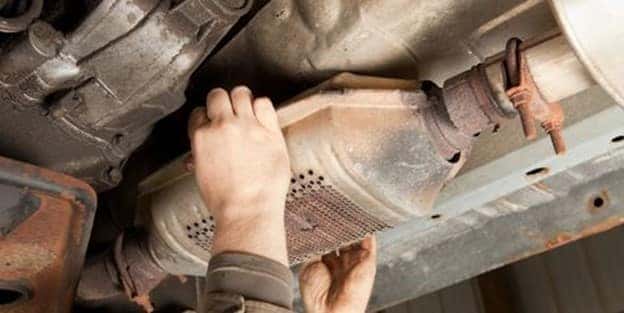
A catalytic converter is part of your car’s exhaust system that prevents harmful engine-exhaust pollutants from entering the atmosphere by converting them to less harmful carbon dioxide, nitrogen, and water vapor. It allows hot exhaust gases to pass through a honeycomb of rare metals such as palladium and rhodium to form a chemical reaction.
Although catalytic converters come in different shapes and sizes, they’re usually about the size of a loaf of bread and are located between the engine and the muffler. Because the converter needs high heat to function, it’s placed as close to the engine as possible. Most gas-powered cars in the U.S. must go through emissions inspections, and without a catalytic converter, a car will not pass.
Why Do Thieves Target Catalytic Converters?
The primary reason that catalytic converters are stolen is not for a free car replacement part, but for money. Thieves target them because they contain three valuable precious metals – rhodium, palladium, and platinum – each of which can fetch thousands of dollars in resale on the black market. The prices of these metals have increased dramatically over the past few years, particularly rhodium. These previous metals are primarily produced and mined in Russia and South Africa, and the war in Ukraine and general supply chain issues have increased the cost of the metals even more.
The increase in price of a converter’s three metals results in an increased cost for the converter itself – and higher values for converters as scrap, since the metals can be recovered and resold. As a result, scrapyards are more actively collecting catalytic converts, and some companies will even purchase converters that are mailed to them. The increasing value makes catalytic converters attractive targets for thieves to steal, often cutting them out from under a car parked on the street.
How are Catalytic Converters Stolen?
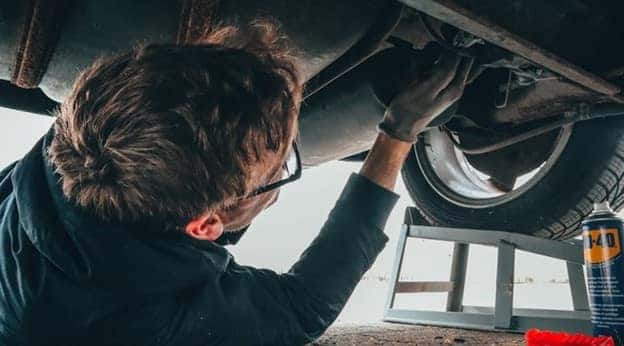
Unfortunately, catalytic converts are very easy to steal. Generally, thieves will slide underneath a car with a battery-powered reciprocating saw and slice it right out of the exhaust line. The entire process takes about two to three minutes, with the reciprocating saw making about as much noise as any other power tool.
Although no reliable count exists of which cars are targeted most often, law enforcement and insurance experts indicate that a few patterns have emerged. Hybrid cars are at particular risk. The metals in a catalytic converter degrade as they pull pollutants out of exhaust gas; since hybrids have lower emissions than gasoline-powered vehicles, the metals in their catalytic converters tend to last longer. For the same reason, newer cars are generally at greatest risk than older cars.
Criminals also target vehicles that they can easily get underneath quickly; trucks and SUVs are also at particular risk since they’re higher off the ground and easy to slide under. However, no car is safe from a determined and experienced catalytic converter thief.
If you discover that your car is suddenly roaring like a cross between a lawn mower and a race car, it’s very possible that your catalytic converter has been stolen. Although your car will run without a catalytic converter, you could face some hefty fines if you’re caught driving a vehicle without one due to environmental protection laws.
How to Prevent Catalytic Converter Theft

Understanding when your car could be a target for thieves is the first step to preventing catalytic converter theft. There are several simple tips that can help protect your car’s catalytic converter. As with most crimes of opportunity, the key to protecting your car is to make the crime harder for a thief to commit. Law enforcement experts recommend the following tips:
• Park indoors when possible: Thieves are less likely to break into a garage when there are easier targets outside.
• Have your catalytic converter etched: Many police departments and some muffler shops in the Chicago area will etch your license plate number onto your car’s catalytic converter for free. Thieves have a much harder time selling converters that are obviously stolen and can be tied to a particular theft, rendering them almost worthless.
• Park in well-lit, highly visible areas: Thieves are less likely to steal in areas where they’re more likely to be seen.
• Look for cameras: Try to park your vehicle in parking garages and parking lots covered by cameras.
• Install motion-sensitive lights and cameras near your driveway or garage: Motion detection lights can help deter thieves from carrying out a theft.
It should be noted that catalytic converters are designed to last for a long time – generally around 10 years. However, nature and time can affect your converter’s efficiency. If your catalytic converter isn’t functioning properly – regardless of whether or not it was stolen – your car may eventually run into problems such as engine misfires and loss of power during acceleration.
If you suspect that your catalytic converter has been stolen or if you need to replace an old and malfunctioning converter, our highly trained service technicians are happy to help.
Give us a call at 888-998-2392 or schedule an appointment with our Online Service Scheduler.
0 comment(s) so far on Tips For Keeping Your Car Safe From Catalytic Converter Theft